Buy pointofsale.eu ?
We are moving the project
pointofsale.eu .
Are you interested in purchasing the domain
pointofsale.eu ?
domain@kv-gmbh.de · 0541-91531010
Buy pointofsale.eu ?
How do you calculate with e-function sequences?
To calculate with e-function sequences, you can use the formula for the nth term of the sequence, which is given by a_n = a_1 * e^(r(n-1)), where a_1 is the first term of the sequence, r is the common ratio, and n is the term number. You can use this formula to find any specific term in the sequence or to find the sum of a certain number of terms in the sequence. Additionally, you can use the properties of exponents to simplify and manipulate the e-function sequences for calculations. **
What are sequences needed for?
Sequences are needed for organizing and storing data in a specific order. They are useful for maintaining the order of elements and accessing them based on their position. Sequences are commonly used in programming to represent lists of items, such as numbers, strings, or objects. They provide a structured way to work with collections of data efficiently. **

Similar search terms for Sequences
Top-Angebote
Products related to Sequences:
-
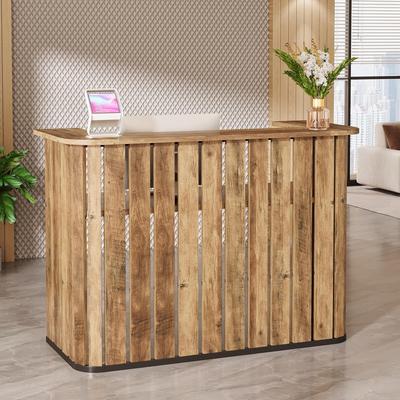
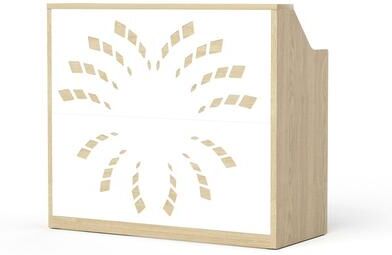
Bluebell Reception Desk with Counter, Retail Checkout Counter Table, Modern Front DeskThis contemporary reception desk, with its U-shaped design, provides both aesthetic appeal and privacy. Designed for optimal efficiency, it has a double-tier structure for easy access to essentials and it is ergonomically high for comfort.262,49 $*Shipping: 0,00 $Secure redirect to the provider
-
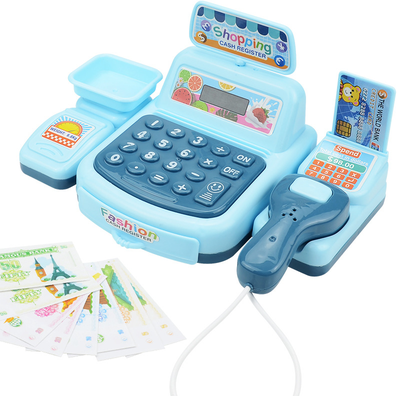
Smart Shopping Spot Realistic Checkout Counter, Simulated Cash Register Toys Playhouse Roleplay, Education Shopping Model, Child Play Games pinkEngage Your Child with a Realistic Shopping Experience The Simulated Cash Register Toys Playhouse offers children a fun and interactive way to roleplay as shopkeepers. This realistic checkout counter teaches kids about money, transactions, and...22,97 $*Shipping: 0,00 $Secure redirect to the provider


-
What are the barcode sequences?
Barcode sequences are unique DNA sequences that are used to label and identify individual samples in high-throughput experiments, such as next-generation sequencing. These barcodes are typically short, specific sequences of nucleotides that can be attached to DNA fragments or other biological molecules. By using different barcode sequences for each sample, researchers can pool multiple samples together and then later identify and separate the individual samples based on their unique barcode sequences. This allows for efficient and accurate processing of large numbers of samples in parallel. **
-
What are GPU clock sequences?
GPU clock sequences refer to the specific frequencies at which a graphics processing unit (GPU) operates. These sequences determine the speed at which the GPU processes data and performs calculations, affecting the overall performance of the graphics card. GPU clock sequences typically consist of a base clock frequency and a boost clock frequency, with the boost clock allowing the GPU to temporarily operate at higher speeds for demanding tasks. Adjusting these clock sequences can impact the power consumption, heat generation, and performance of the GPU. **
-
How to solve inequalities with sequences?
To solve inequalities with sequences, you can first find the general term of the sequence and then use it to determine the behavior of the sequence. You can then use this information to solve the inequality by comparing the terms of the sequence to the inequality. If the sequence is increasing or decreasing, you can use this information to determine the range of values that satisfy the inequality. Finally, you can use the solution to the inequality to find the specific terms of the sequence that satisfy the inequality. **
-
What are Java sequences and series?
In Java, sequences and series refer to a collection of numbers that follow a specific pattern or rule. A sequence is an ordered list of numbers, while a series is the sum of the terms in a sequence. Java provides various ways to generate and manipulate sequences and series, such as using loops, arrays, or mathematical formulas. These concepts are commonly used in programming to perform calculations, analyze data, or solve mathematical problems. **
What is the limitation of sequences?
The limitation of sequences is that they can only represent a linear order of elements. This means that they are not suitable for representing relationships or structures that are more complex than a simple list. Additionally, sequences do not provide a way to represent non-sequential relationships between elements, such as hierarchical or network structures. Finally, sequences can become unwieldy and difficult to manage when they grow very large, making it challenging to efficiently access and manipulate the elements. **
'How do you prove these sequences?'
To prove a sequence, one must show that it follows a specific pattern or rule. This can be done by demonstrating that each term in the sequence satisfies the given rule or pattern. This can be achieved through mathematical induction, direct proof, or by showing that the sequence can be expressed as a function of n, where n represents the position of the term in the sequence. Additionally, one can also use the properties of sequences, such as arithmetic or geometric progressions, to prove the sequence. **
Top-Angebote
Products related to Sequences:
-
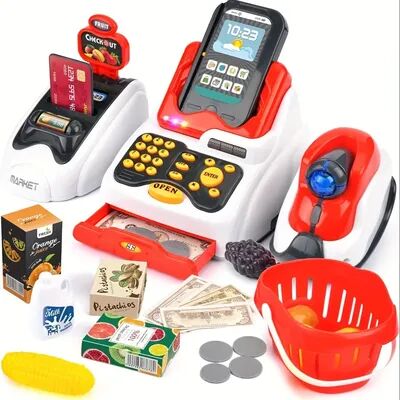
Perfect Picks Market Toy Cash Register For Kids, Checkout Scanner, Play Money Food Set, , Credit Card Machine, Fruit Card Reader Toy Cash Register For Kids, Checkout Scanner, Play Money Food Set, , Credit Card Machine, Fruit Card ReaderEngage Your Child with Playful Learning The 33PCS Toy Cash Register for Kids with Checkout Scanner is a perfect way to help children develop essential skills while having fun! Designed for little ones, this interactive toy includes a realistic...59,97 $*Shipping: 0,00 $Secure redirect to the provider
-
Hanabi Cooperative Card Game by R & R Games - 5 Color Sequences - Teamwork and DeductionHanabi is a cooperative card game where players work together to create complete sequences of fireworks cards. Each player holds their cards facing away from them, so they must rely on indirect clues to help their teammates decide which cards to play, discard or keep. Players take turns giving carefully limited clues about color or number, and must use their information tokens thoughtfully because mistakes are costly. To play, give another player a clue about their cards, play a card to build a firework sequence, or discard a card to recover an information token. The goal is to work together to complete the five color sequences. Hanabi offers a compact and thoughtful game experience for players who enjoy deduction, teamwork, and careful decision-making.8,79 £*Shipping: 3,95 £Secure redirect to the provider
-
How do you calculate with e-function sequences?
To calculate with e-function sequences, you can use the formula for the nth term of the sequence, which is given by a_n = a_1 * e^(r(n-1)), where a_1 is the first term of the sequence, r is the common ratio, and n is the term number. You can use this formula to find any specific term in the sequence or to find the sum of a certain number of terms in the sequence. Additionally, you can use the properties of exponents to simplify and manipulate the e-function sequences for calculations. **
-
What are sequences needed for?
Sequences are needed for organizing and storing data in a specific order. They are useful for maintaining the order of elements and accessing them based on their position. Sequences are commonly used in programming to represent lists of items, such as numbers, strings, or objects. They provide a structured way to work with collections of data efficiently. **
-
What are the barcode sequences?
Barcode sequences are unique DNA sequences that are used to label and identify individual samples in high-throughput experiments, such as next-generation sequencing. These barcodes are typically short, specific sequences of nucleotides that can be attached to DNA fragments or other biological molecules. By using different barcode sequences for each sample, researchers can pool multiple samples together and then later identify and separate the individual samples based on their unique barcode sequences. This allows for efficient and accurate processing of large numbers of samples in parallel. **
-
What are GPU clock sequences?
GPU clock sequences refer to the specific frequencies at which a graphics processing unit (GPU) operates. These sequences determine the speed at which the GPU processes data and performs calculations, affecting the overall performance of the graphics card. GPU clock sequences typically consist of a base clock frequency and a boost clock frequency, with the boost clock allowing the GPU to temporarily operate at higher speeds for demanding tasks. Adjusting these clock sequences can impact the power consumption, heat generation, and performance of the GPU. **
Similar search terms for Sequences
-
Bluebell Reception Desk with Counter, Retail Checkout Counter Table, Modern Front DeskThis contemporary reception desk, with its U-shaped design, provides both aesthetic appeal and privacy. Designed for optimal efficiency, it has a double-tier structure for easy access to essentials and it is ergonomically high for comfort.262,49 $*Shipping: 0,00 $Secure redirect to the provider
-
Smart Shopping Spot Realistic Checkout Counter, Simulated Cash Register Toys Playhouse Roleplay, Education Shopping Model, Child Play Games pinkEngage Your Child with a Realistic Shopping Experience The Simulated Cash Register Toys Playhouse offers children a fun and interactive way to roleplay as shopkeepers. This realistic checkout counter teaches kids about money, transactions, and...22,97 $*Shipping: 0,00 $Secure redirect to the provider
-
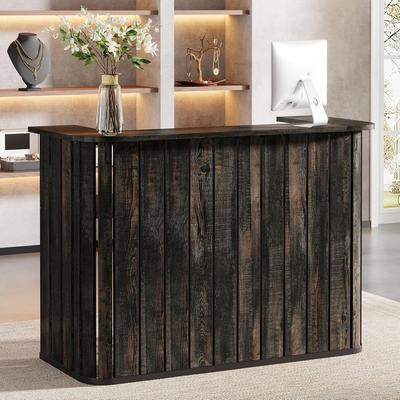
BLUEBELL "63"" Reception Desk with Counter, Modern U-Shaped Front Desk, Retail Checkout Counter Table"Enhance your reception area or office workspace with this 63-inch modern U-shaped reception desk, designed to combine style, functionality, and privacy.217,59 $*Shipping: 0,00 $Secure redirect to the provider
-
Modern Reception Desk, Retail Checkout Desk for Cashier Counter, Salon, Office And Customer Service Front DeskThis modern reception desk combines sleek design with practical storage, making it an ideal centerpiece for any office, retail store, or hotel lobby.263,99 $*Shipping: 0,00 $Secure redirect to the provider
-
How to solve inequalities with sequences?
To solve inequalities with sequences, you can first find the general term of the sequence and then use it to determine the behavior of the sequence. You can then use this information to solve the inequality by comparing the terms of the sequence to the inequality. If the sequence is increasing or decreasing, you can use this information to determine the range of values that satisfy the inequality. Finally, you can use the solution to the inequality to find the specific terms of the sequence that satisfy the inequality. **
-
What are Java sequences and series?
In Java, sequences and series refer to a collection of numbers that follow a specific pattern or rule. A sequence is an ordered list of numbers, while a series is the sum of the terms in a sequence. Java provides various ways to generate and manipulate sequences and series, such as using loops, arrays, or mathematical formulas. These concepts are commonly used in programming to perform calculations, analyze data, or solve mathematical problems. **
-
What is the limitation of sequences?
The limitation of sequences is that they can only represent a linear order of elements. This means that they are not suitable for representing relationships or structures that are more complex than a simple list. Additionally, sequences do not provide a way to represent non-sequential relationships between elements, such as hierarchical or network structures. Finally, sequences can become unwieldy and difficult to manage when they grow very large, making it challenging to efficiently access and manipulate the elements. **
-
'How do you prove these sequences?'
To prove a sequence, one must show that it follows a specific pattern or rule. This can be done by demonstrating that each term in the sequence satisfies the given rule or pattern. This can be achieved through mathematical induction, direct proof, or by showing that the sequence can be expressed as a function of n, where n represents the position of the term in the sequence. Additionally, one can also use the properties of sequences, such as arithmetic or geometric progressions, to prove the sequence. **
* All prices are inclusive of VAT and, if applicable, plus shipping costs. The offer information is based on the details provided by the respective shop and is updated through automated processes. Real-time updates do not occur, so deviations can occur in individual cases. ** Note: Parts of this content were created by AI.